Which Type of Wig Looks the Most Natural? (And How to Make Any Wig Look Real)
30 August 2026
Quality Wigs NZ: Choosing a Natural Synthetic or Human Hair Wig for Everyday Wear
Key Takeaways
- Natural appearance depends on a combination of high quality fibre and specialised cap construction.
- Human hair wigs offer the greatest styling versatility and a longer lifespan.
- Lace front and monofilament designs create the illusion of a natural hairline and scalp.
- Correct sizing and placement are essential for comfort and an undetectable finish.
- Financial support is available through the Ministry of Health wig subsidy for New Zealand residents.
Choosing a new wig is a significant decision, whether you are managing medical hair loss or simply looking for a new style. In our experience, the most common concern for Kiwis is finding a piece that looks and feels like their natural hair. The global hair wigs and extensions market is expanding rapidly, projected to increase from US$15.5 billion in 2025 to US$30.7 billion by 2032. This growth represents a CAGR of 10.2 percent. CAGR stands for Compound Annual Growth Rate, which is a way to measure the average yearly growth over a specific period. This surge shows that wearing high quality hair is now a mainstream choice for many people across the globe and right here in New Zealand.
The Foundation of Realism: Human Hair vs Synthetic Wigs
The first question we often hear in our salon is whether human hair or synthetic fibre provides the most natural look. Both options have advanced significantly, but they serve different lifestyles. Premium human hair wigs currently command a 63 percent price premium over synthetic alternatives. Despite this higher cost, they represent 58 percent of all wig purchases in the US$500 plus segment. This preference exists because human hair, particularly Remy hair, offers unmatched natural movement and the ability to use heat styling tools.
Modern synthetic hair is a fantastic, low maintenance option for everyday wear. It retains its style after washing and is often more affordable for those on a budget. In the local market, the New Zealand hair wig and extension market is projected to reach NZ$7.9 million in 2025, showing that more Kiwis are embracing both types of hair solutions.
When considering the investment, human hair wigs can range from $700 to over $3,500. We recommend weighing the initial cost against the daily time you want to spend on styling. If you enjoy changing your hairstyles frequently, human hair is the perfect solution. If you prefer a "shake and go" routine, a premium synthetic brand like Jon Renau might be your best match.
Why Cap Construction Matters More Than You Think
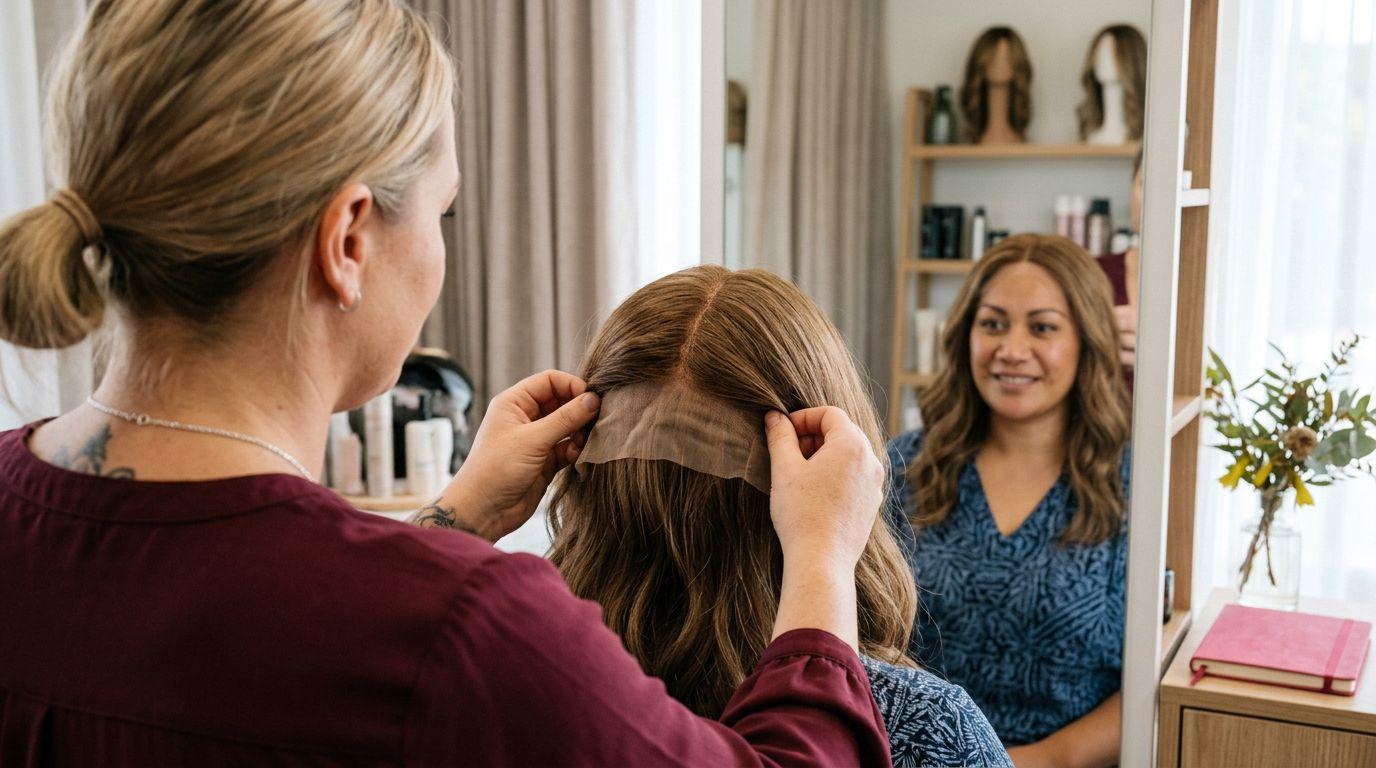
While the hair fibre is important, the way the wig is built determines how realistic it looks against your skin. A natural look relies heavily on the hairline and the crown area. We always advise clients to look for two specific features: a lace front and a monofilament top. A lace front uses a sheer mesh material at the forehead where each hair is hand tied, creating the appearance of hair growing directly from your own scalp. This allows you to style the hair off your face with confidence.
A monofilament top offers a similar benefit for the parting area. The sheer material allows your natural skin colour to show through, making the part look authentic from any angle. For those experiencing thinning hair rather than full hair loss, a topper might be a better option. A topper provides targeted coverage for the crown and blends with your existing hair. You can learn more about the differences between a lace front and monofilament top in our modern guide to wigs and toppers.
Finding the Perfect Fit for Comfort and Security
A wig that does not fit correctly will never look natural. If the cap is too large, it may buckle or shift, while a cap that is too small will ride up at the back. We've found that the average adult head circumference is approximately 56 cm, but variations are common. Taking accurate measurements is the first step to ensuring your new wig feels like a second skin rather than an accessory.
We provide a range of styles including adult and junior options to ensure every customer finds a comfortable fit. For our clients across New Zealand, we offer detailed guidance on wig cap measurement to make online shopping easier. Once you have the right size, placement is key. A common mistake we observe is wearing the wig too low on the forehead. We recommend the four finger rule: place four fingers above your eyebrows to find where your natural hairline should begin. This simple trick instantly makes the wig look more balanced with your face shape.
Styling Tricks for an Undetectable Result
Even the finest quality wigs benefit from a few personal touches. When you receive a new wig, the hairline can sometimes look a little too perfect or dense. We often suggest lightly plucking a few hairs around the face to create a softer, more irregular transition. Another professional secret is using a small amount of powder or concealer that matches your skin tone along the part line. This hides the knots in the lace and makes the scalp appearance even more convincing.
If you are wearing a wig due to medical hair loss, such as alopecia, trichotillomania, or chemo, you may find your scalp is more sensitive. In these cases, a lightweight, hand tied cap is ideal as it offers the softest feel against the skin. Dermatologists now increasingly view wigs as a protective styling tool, with 72 percent of dermatologists recommending wigs as a low manipulation option for scalp health.

Accessing the Ministry of Health Wig Subsidy
We understand that hair loss can be a difficult time, and the cost of a high quality wig is a significant consideration. The New Zealand government provides financial assistance to help cover the cost of wigs and hairpieces for those with a medical necessity. As an approved provider, we help our clients navigate the subsidy claim process, whether they visit us in Auckland or shop with us online.
The current Ministry of Health wig subsidy entitlements are as follows: Adults with permanent hair loss are eligible for $2,330.67 over a nine year period. Adults with temporary hair loss, such as those undergoing cancer treatment, can claim $408.89 over one year. Children under the age of 18 are entitled to $1,226.67 over a three year period. We are here to help you understand these options and ensure you get the best value from your funding.
Expert Support for Your Hair Journey
Whether you are looking for a new style or a solution for temporary or permanent hair loss, our goal is to provide you with a selection of wigs that restore your confidence. We source our range from trusted international suppliers, typically ensuring dispatch within 10 working days after payment. If an item is out of stock, we maintain proactive communication to keep you informed every step of the way.
Every face shape and lifestyle is unique, which is why we offer free, private consultations. We can guide you through the selection of colours, lengths, and cap designs to ensure you find the perfect wig. If you are ready to explore your options, we invite you to reach out to our team for personalised advice and support. Our experience has shown that with the right guidance, anyone can achieve a look that is entirely natural and uniquely their own.